Ophthalmologist in Lincolnwood
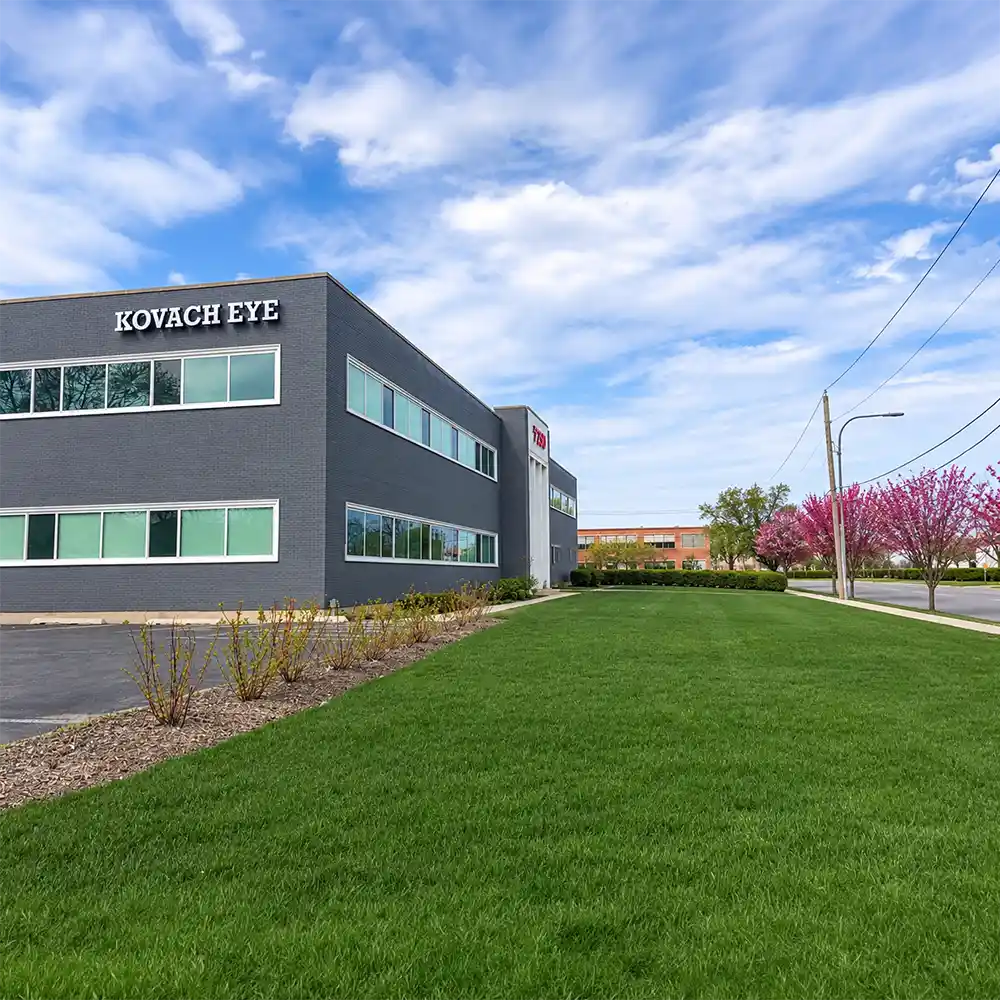
Our Lincolnwood office provides medical and surgical eye care to patients from Skokie, Highland Park, Glenview, Northbrook, Chicago, and nearby communities. Our board-certified ophthalmologists offer cataract surgery, LASIK and other vision correction procedures, and specialized care for glaucoma, corneal conditions, retinal diseases and other eye conditions.
Whether you need a cataract evaluation, vision correction consultation or treatment for an eye condition, our team provides personalized recommendations based on your eye health, vision needs and lifestyle. We welcome new patients and accept many major insurance plans.
Visit Us in Lincolnwood
Business Hours
Monday – Friday: 9AM – 5PM
Saturday: 9AM – 12PM
Sunday: Closed

Our Lincolnwood Providers
Eye Care Services We Offer in Lincolnwood
Comprehensive medical and surgical eye care in Lincolnwood starts with cataract surgery. Each surgery is paired with a broad choice of intraocular lens (IOL) options, selected around the patient’s eye health, daily life, and vision goals. Beyond cataracts, we offer modern vision correction through LASIK, SMILE LASIK, EVO ICL, and PRK, and our ophthalmologists treat presbyopia, glaucoma, corneal conditions, macular degeneration, and thyroid eye disease, backed by decades of ophthalmology experience.
Our Lincolnwood ophthalmologists focus on a broad set of eye conditions and vision needs, including:
- Comprehensive Ophthalmology and Eye Care
- Cataract Surgery and Intraocular Lens (IOL) Options
- LASIK and Modern Vision Correction
- Retina Conditions and Treatments
- Corneal Conditions and Treatments
- Glaucoma Care and Treatments
- Eyelid and Facial Plastic Surgery (Oculoplastics)
Our Lincolnwood doors are open to new patients, and we participate with most major insurance plans.
Comprehensive Medical Eye Care
Eye exams at our Lincolnwood office are open to patients of every age and check for refractive errors and common eye diseases while they’re still easy to manage. Diabetes can affect the eyes in more ways than diabetic retinopathy, so we also monitor diabetic eye health closely. Most major insurance plans are accepted, so getting started is simple.


Cataracts
Cataracts develop when the eye’s natural lens turns cloudy, leaving everything looking muted, hazy, or washed out, a bit like a smudged pair of glasses. They’re most often a product of aging, and cataract surgery ranks among the safest, most successful procedures performed today. In the operating room, a clear intraocular lens (IOL) takes the place of the clouded lens, helping restore your vision.
Intraocular Lens (IOL) Options for Cataract Surgery
A cloudy lens is only part of the story in cataract surgery. The procedure is also an opportunity to decide how you want to see at near, intermediate, and far distances and to support the activities that fill your days. Our cataract surgeons offer a wide range of intraocular lens options, each chosen to match your vision goals, your lifestyle, and the health of your eyes.
Many patients choose a standard monofocal lens, which focuses at one distance, while others prefer an advanced lens that provides vision across several distances and may lessen the need for glasses. If you have astigmatism, a toric lens can correct it during the same surgery. As your eye heals, a series of light treatments lets your surgeon adjust the Light Adjustable Lens until it matches your goals.
For many patients, the goal goes beyond needing glasses less often. It’s about getting back to the moments you care about. Depending on your results, improved vision may make it easier to read a menu in dim restaurant lighting, drive at night, spot a friend across a crowded room, or return to gardening, golf, and time with the grandkids.
Your goals, everyday life, and eye health all help determine the right lens, and our cataract surgeons will walk you through each option so you can choose the one that fits your life.


LASIK & Modern Vision Correction
Whether you’re just starting to explore vision correction or you’re ready to schedule, our program guides you from your first consultation through follow-up.
LASIK
LASIK is a procedure in which a laser gently reshapes the front surface of the eye so incoming light focuses precisely on the retina. Many patients notice significantly improved vision within a day and enjoy leaving glasses or contacts behind, whether that’s at the office, on the court, or at the gym. Topical anesthesia keeps you comfortable and awake during the procedure, and a free consultation will tell you whether LASIK suits your prescription and lifestyle.
Wondering whether LASIK fits your life? Call us or schedule a consultation today.

SMILE LASIK
SMILE LASIK is a flapless approach to laser vision correction that removes a thin disc of corneal tissue through an incision smaller than 4mm. Kovach Eye Institute was the first in Illinois to perform SMILE LASIK.

EVO ICL™
EVO ICL is a LASIK alternative that takes a different route: instead of reshaping the cornea, a soft, biocompatible lens is placed behind the iris in a procedure that typically takes 20 to 30 minutes. Patients whose thinner corneas or higher prescriptions make LASIK a poor fit are often good candidates for it, and Kovach Eye Institute was also the first in Illinois to insert the EVO ICL.

PRK
PRK is a surface-based laser option that skips the corneal flap, making it a good match for thinner corneas. Healing takes a little longer than with LASIK, but the procedure treats nearsightedness, farsightedness, and astigmatism using the same trusted laser technology.

Presbyopia
Holding your phone or a menu at arm’s length is a classic sign of presbyopia, which happens as the eye’s lens gradually loses flexibility. It usually starts to show up in your 40s and eventually affects nearly everyone. We shape a plan around your visual goals, from updated lens options to a longer-term surgical solution, so you can rely less on reading glasses.
Refractive Lens Exchange (RLE)
If you’re over 40 and close-up tasks are getting harder, or you have a significant degree of nearsightedness, farsightedness, or astigmatism, RLE may be an option. Your natural lens is exchanged for a custom intraocular lens, and because the natural lens is removed, cataracts can’t develop in that eye later on, making it a lasting solution.


Retinal Conditions and Treatments
Retinal problems rarely announce themselves early, which is why our retina team focuses on finding and treating them before your sight is at risk.
Age-Related Macular Degeneration
The macula, a small area of the retina, handles the detailed central vision you use to read and recognize faces, and macular degeneration wears it down. Both the dry and wet forms are managed at our office, with options that include anti-VEGF injections guided by detailed retinal imaging.
Diabetic Retinopathy
Years of high blood sugar can injure the small blood vessels that feed the retina, leading to diabetic retinopathy. Regular dilated exams let us catch changes early, when medication, laser treatment, or injections can do the most good.
Retinal Detachment
A retinal detachment is an emergency in which the retina peels away from its normal position, and prompt surgery is often needed to prevent lasting vision loss. Our retina team can evaluate retinal tears and detachments urgently and perform the surgical repair needed to protect your sight.
Breakthrough Retina Treatments
For dry age-related macular degeneration, Valeda® Light Therapy delivers targeted light in a non-invasive, FDA-authorized treatment meant to support retinal cells and slow progression. Encelto™, an FDA-approved cell-based therapy, is also available for Macular Telangiectasia Type 2 (MacTel), a rare retinal disease, and is designed to help slow vision loss. Both treatments are part of our push to bring patients some of the newest advances in retina care.
Glaucoma
Because glaucoma can injure the optic nerve long before you notice symptoms, it’s often called the silent thief of sight. Our glaucoma specialists favor early, proactive treatment and look well beyond daily drops to protect your sight over the long run.
Non-Surgical & Laser Treatments
Drops are usually the first step, since prescription medication can lower eye pressure and keep the optic nerve from further harm. Selective Laser Trabeculoplasty (SLT) is a fast, in-office laser option that helps the eye drain fluid more naturally and may reduce your need for drops.
Advanced & Interventional Glaucoma Treatment
Our team monitors ocular hypertension and elevated eye pressure to assess glaucoma risk and determine what treatment may be appropriate. When laser treatments or eye drops are insufficient, our ophthalmologists offer advanced glaucoma treatment options, including minimally invasive glaucoma surgery (MIGS) and other surgical procedures to help lower eye pressure and protect the optic nerve. MIGS procedures may improve fluid drainage and can often be performed during cataract surgery. Sustained-release implants may reduce the need for daily glaucoma eye drops.
For more advanced or difficult-to-control glaucoma, surgical options such tube shunts and valves may help manage eye pressure.
Questions about your eye health? Reach out and our team will point you in the right direction.
Corneal Conditions and Treatments
The cornea supplies much of the eye’s focusing power, so even slight shifts in its shape or transparency can change how you see. Our specialists look for problems early and help you choose the right treatment.
Keratoconus
In keratoconus, the front surface of the eye gradually weakens and steepens into a cone-like shape, which distorts vision over time. Spotting it early gives you more options for managing it.
Corneal Cross-Linking
Corneal cross-linking stiffens the cornea to slow or stop keratoconus from getting worse. Our Epioxa treatment is FDA-approved and keeps the outer corneal layer in place, which generally means a more comfortable recovery.
Corneal Transplants
If keratoconus advances or the cornea is badly damaged, a transplant may be the right next step. Our surgeons perform full-thickness and partial-thickness transplants as outpatient procedures, selecting the technique that fits the patient’s eye.
Eyelid & Facial Plastics (Oculoplastics)
Heavy or drooping eyelids can interfere with sight as well as appearance, and our oculoplastics team addresses both. Options include blepharoplasty to trim away excess skin, ptosis repair to lift a lid that sags into your line of sight, and BOTOX® to ease the lines around the eyes.

Your Eye Doctor in Lincolnwood & Nearby Communities
Kovach Eye Institute provides medical and surgical eye care for patients across Lincolnwood, Chicago, Wilmette, Highland Park, Deerfield, Glenview, and surrounding Chicagoland communities. Our Lincolnwood office sits at the corner of Cicero Avenue and Touhy Avenue, right off the highway and just north of the I-94 Touhy exit, so it’s easy to reach for specialized eye care.
Looking for an ophthalmologist to treat an existing eye condition, or weighing your options for better vision? Our Lincolnwood team will help you plan your next steps and protect your eyes for the long run.
Traveling from Chicago
Click here for directions
Traveling from Evanston
Click here for directions
Traveling from Wilmette
Click here for directions
Traveling from Winnetka
Click here for directions
Traveling from Northbrook
Click here for directions
Traveling from Deerfield
Click here for directions
Contact Us in Lincolnwood, Illinois
Ready to see an ophthalmologist in Lincolnwood? Call our office or book online. New patients are always welcome, and our full list of accepted insurance plans is available on our insurance page.