Keratoconus is a progressive eye condition that causes the cornea to thin and gradually bulge into a cone-like shape, leading to blurred and distorted vision. One of the most important advancements in treating keratoconus is corneal cross-linking (CXL), a procedure designed to strengthen the cornea and slow or stop the condition from worsening.
Corneal cross-linking works by using riboflavin (vitamin B2) eye drops and controlled ultraviolet (UV) light to reinforce the structural fibers of the cornea. By stabilizing the cornea, this treatment helps protect long-term vision and may reduce the risk of more advanced interventions, such as corneal transplant.
At Kovach Eye Institute, our board-certified ophthalmologists perform corneal cross-linking using Epioxa™ (riboflavin 5′-phosphate ophthalmic solution), an FDA-approved, epithelium-on approach designed to improve comfort and recovery. We proudly serve patients throughout Chicagoland with convenient locations in Elmhurst, Naperville, South Barrington and Lincolnwood.
Early treatment is key. The sooner keratoconus is addressed, the better the chance of slowing its progression and preserving your vision.
Corneal cross-linking (CXL) is a minimally invasive procedure used to slow or stop the progression of keratoconus, a condition that causes the cornea to thin and bulge outward over time. As the cornea becomes more irregular in shape, vision can become increasingly distorted and difficult to correct with glasses or contact lenses.
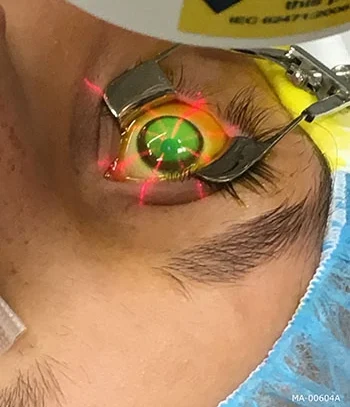
CXL works by strengthening the internal structure of the cornea. During the procedure, riboflavin (vitamin B2) eye drops are applied to the surface of the eye and activated with controlled ultraviolet (UV) light. This process creates additional bonds, or “cross-links,” between collagen fibers within the cornea, helping it become more stable and resistant to further thinning or bulging.
The goal of corneal cross-linking is not to reverse vision loss that has already occurred, but to preserve the vision you have by preventing the condition from worsening. In many cases, stabilizing the cornea early can reduce the likelihood of needing more advanced treatments, such as a corneal transplant.
At Kovach Eye Institute, we offer advanced corneal cross-linking options, including Epioxa™ cross-linking, an FDA-approved epithelium-on approach designed with patient comfort and recovery in mind.
What Is Epioxa?
Epioxa represents a breakthrough in keratoconus care. It is the first and only FDA-approved, epithelium-on (epi-on), oxygen-enriched corneal collagen cross-linking (CXL) treatment for keratoconus (KC). Unlike older cross-linking approaches, Epioxa does not require removal of the outer layer of the cornea, known as the epithelium, making it a truly non-invasive option designed for improved patient comfort and a shorter recovery time.
Epioxa is based on two riboflavin formulations, Epioxa HD and Epioxa, which are administered sequentially during the procedure, followed by UV light activation to strengthen the corneal collagen fibers and slow or stop the progression of keratoconus.1
Why Epioxa Is Different
Previous corneal cross-linking procedures required the removal of the corneal epithelium (epi-off CXL) to allow riboflavin to penetrate the corneal tissue. While effective, this approach involved a longer and more uncomfortable recovery period.
Epioxa changes the standard of care:
Non-invasive: The outer layer of the cornea is left intact throughout the procedure.
FDA-approved: Epioxa is the only epithelium-on CXL treatment to receive FDA approval for keratoconus.
Oxygen-enriched formula: The proprietary oxygen-enriched riboflavin solution is designed to optimize the cross-linking reaction without removing the epithelium.
Designed for comfort: Patients experience less discomfort and a shorter recovery compared to traditional epi-off CXL.
Proven in clinical trials: The safety and efficacy of Epioxa were evaluated in two prospective, multicenter, randomized, placebo-controlled Phase 3 clinical trials.
At Kovach Eye Institute, Epioxa is our preferred approach to corneal cross-linking for eligible patients with keratoconus.
Understanding Keratoconus
Keratoconus is a condition in which the cornea, the clear front surface of the eye, progressively thins and bulges outward. This irregular shape causes light to scatter rather than focus properly on the retina, resulting in blurred and distorted vision, increased sensitivity to light, and difficulty seeing clearly even with glasses or standard contact lenses.
Keratoconus typically begins in the teenage years or early adulthood and can worsen over time. Without treatment, the condition can advance to the point where vision correction is no longer sufficient and a corneal transplant may become necessary. In severe cases, untreated keratoconus can result in legal blindness.
The goal of Epioxa treatment is not to restore vision that has already been lost, but to halt the progression of keratoconus and prevent further deterioration. Patients will likely continue to use glasses or contact lenses after treatment.
Who Is a Candidate for Corneal Cross-Linking?
Epioxa cross-linking is FDA-approved for the treatment of keratoconus in adults and pediatric patients aged 13 years and older. Candidacy is determined during a comprehensive evaluation at Kovach Eye Institute, where our team will assess the stage and progression of your keratoconus and determine whether Epioxa is the right treatment for you.
If you or your child has been diagnosed with keratoconus, or if you are experiencing worsening vision that has not been adequately corrected with glasses or contact lenses, we encourage you to schedule a consultation as soon as possible. Early intervention offers the best opportunity to preserve your vision.
What to Expect During Corneal Cross-Linking
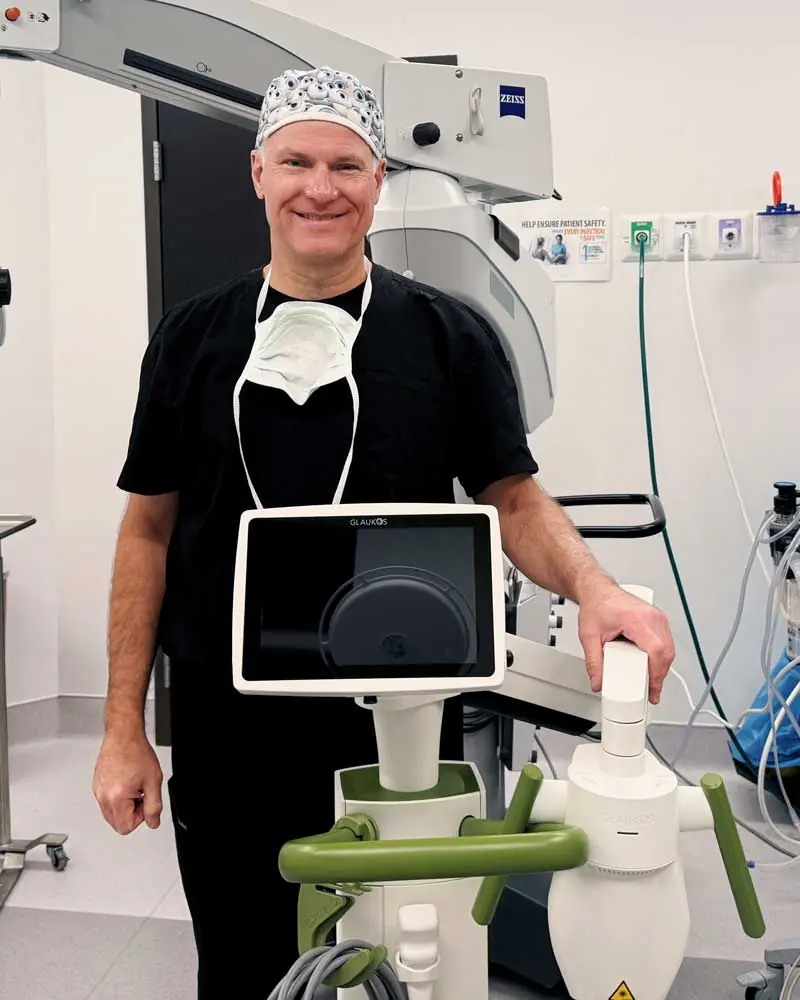
Epioxa is performed one eye at a time, with the second eye typically treated between one week and three months after the first. The procedure is performed at our surgical facility, the Ophthalmology Surgery Center of Illinois (OSCI). The procedure involves the topical application of the Epioxa riboflavin solution to the surface of the eye, followed by controlled UV light exposure to activate the cross-linking process. Because the epithelium remains intact, there is no incision and no removal of corneal tissue.
The procedure is performed in an outpatient setting, and most patients are able to return to their normal activities more quickly than with traditional epi-off CXL.
Risks and Considerations
As with any medical procedure, Epioxa carries potential risks and side effects. During your consultation, our team will review these with you in detail and answer any questions you may have. Commonly reported side effects in clinical trials included temporary visual fluctuations and mild ocular discomfort during or after the procedure. Serious adverse events were uncommon.2
It is important to understand that Epioxa is intended to slow or halt the progression of keratoconus, not to improve existing vision. Individual results may vary. Please refer to the full Prescribing Information for a complete list of risks, contraindications, and warnings, or speak directly with your Kovach Eye Institute physician.
Insurance and Cost
Coverage for corneal cross-linking varies depending on your insurance plan and the specifics of your diagnosis. We encourage patients to contact our office prior to their consultation so our team can help verify your benefits and discuss available options. Our staff is committed to helping you understand your coverage and navigate the financial aspects of your care. We can also help you explore financing options for keratoconus treatment.
Advanced Surgical Facilities and Accreditation
Surgeons at Kovach Eye Institute perform procedures at the Ophthalmology Surgery Center of Illinois (OSCI), a physician-owned, AAAHC accredited ambulatory surgery center founded by Dr. Kevin J. Kovach. Designed specifically for ophthalmic procedures, OSCI provides a specialized outpatient environment for advanced eye surgery. The center is equipped with advanced surgical technology and supported by experienced clinical teams focused exclusively on eye care.
Why Choose Kovach Eye Institute for Corneal Cross-Linking
Kovach Eye Institute has served patients throughout Chicagoland for over 25 years. Our board-certified ophthalmologists are committed to offering the most advanced, evidence-based treatments available, and we are proud to offer advanced corneal cross-linking using Epioxa, an FDA-approved epithelium-on approach for keratoconus.
Our team brings subspecialty expertise in corneal disease and refractive conditions, and our practice is built on a foundation of clinical excellence, patient-centered care, and access to the latest FDA-approved therapies. Our ophthalmologists maintain active memberships in leading professional organizations, including the American Academy of Ophthalmology and the American Board of Ophthalmology, and are committed to ongoing education in the latest advances in corneal care.
Patient Testimonials and Reviews
I have been going to see Dr. G since fall of last year for my cornea disease. I just had my second eye procedure done while having the most amazing results from the first procedure on my left eye. He knows what he’s doing. He is easy to talk to, and the man and all of his staff work a very, very, very, very hard. Each time I’ve gone into any other offices all I have seen is all of their dedicated staff working there behind off to take care of everyone that comes to the door and to give them all the same care across the board. I recommend anyone to go to Kovach.
– Nate S.
Frequently Asked Questions About Corneal Cross-Linking
Traditional corneal cross-linking (often called epi-off CXL) involves removing the outer layer of the cornea to allow riboflavin to penetrate the tissue. Epioxa cross-linking uses an epithelium-on approach, meaning the surface layer of the cornea remains intact during treatment. This difference may result in less discomfort and a faster recovery for some patients.
Corneal cross-linking (CXL) is typically recommended for patients with progressive keratoconus. Epioxa cross-linking is FDA-approved for adults and pediatric patients aged 13 years and older. A comprehensive evaluation is needed to determine the most appropriate treatment approach.
Corneal cross-linking (CXL) has been studied extensively and is considered an effective treatment for slowing or halting the progression of keratoconus. Epioxa cross-linking was evaluated in prospective, multicenter, randomized clinical trials prior to FDA approval. As with any procedure, your provider will review potential risks and expected outcomes during your consultation.
The primary goal of corneal cross-linking (CXL) is to stabilize the cornea and prevent further vision loss. While some patients may notice mild visual improvement, most will continue to rely on glasses or contact lenses after treatment.
Corneal cross-linking (CXL) is typically performed one eye at a time to allow for proper healing and monitoring between treatments.
To determine the best treatment option for you, initial exams must be completed at one of our clinic locations—Elmhurst, Naperville, South Barrington, or Lincolnwood—prior to scheduling surgery. Corneal cross-linking procedures at Kovach Eye Institute are performed at the Ophthalmology Surgery Center of Illinois (OSCI), an AAAHC-accredited, physician-owned ambulatory surgery center designed specifically for ophthalmic care.
Contact Us
If you have been diagnosed with keratoconus or are concerned about changes in your vision, do not wait. Early treatment can make a meaningful difference in preserving your sight. Schedule a consultation with the board-certified ophthalmologists at Kovach Eye Institute, proudly serving patients throughout Chicagoland.