Cataract Surgery
Cataracts affect millions of Americans each year, and if you’re experiencing cloudy vision, difficulty seeing at night, or increasing glare sensitivity, you’re not alone. At Kovach Eye Institute, our board-certified comprehensive ophthalmologists, led by Dr. Kevin J. Kovach, provide advanced cataract surgery to patients in Chicago and the surrounding Chicagoland areas. With over 30 years of clinical and surgical experience, Dr. Kovach is recognized as a leader in advanced ophthalmology, specializing in cataract surgery and vision restoration. Whether you’re seeking your first consultation or exploring surgical options, our team is committed to helping you regain improved vision and enhance your quality of life.


At Kovach Eye we believe in vision without limits.
Are you a candidate for vision correction surgery? Take our Vision Quiz to see if it’s a good fit!
- What Is a Cataract?
- What Causes Cataracts?
- Types of Cataracts
- Cataract Symptoms and When to Seek Help
- When Is It Time for Cataract Surgery?
- Intraocular Lens (IOL) Options
- Advanced Cataract Surgery Technology
- The Cataract Surgery Procedure
- Recovery and Post-Operative Care
- Potential Complications and How We Manage Them
- Why Choose Kovach Eye Institute for Your Cataract Surgery
- Patient Testimonials and Reviews
- Cost and Insurance Coverage
- Frequently Asked Questions
What Is a Cataract?
A cataract is a clouding of the eye’s natural lens, which sits behind the iris and pupil. The lens is normally transparent, allowing light to pass through and focus on the retina at the back of the eye. When a cataract develops, the lens becomes increasingly opaque, scattering light and reducing the quality of your vision.
According to the National Eye Institute, cataracts are one of the
 Trusted Source
Cataract Data and Statistics
National Eye Institute
Go to Source
leading causes
of vision loss worldwide, particularly in older adults. The condition develops gradually in most cases, and many people don’t realize they have cataracts until they notice changes in their vision during routine eye exams or daily activities.
Trusted Source
Cataract Data and Statistics
National Eye Institute
Go to Source
leading causes
of vision loss worldwide, particularly in older adults. The condition develops gradually in most cases, and many people don’t realize they have cataracts until they notice changes in their vision during routine eye exams or daily activities.
Cataracts are not a film that grows over the eye, nor are they contagious. Instead, the proteins within the lens clump together over time, creating the clouding effect. This process is typically painless, which is why regular eye exams are essential for early detection.
What Causes Cataracts?
Cataracts develop for several reasons, and understanding the risk factors can help you take preventive steps:
Age-Related Cataracts
The most common type, age-related cataracts, develop as the proteins in the lens naturally break down over time. This is a normal part of aging, and most people over 60 experience some degree of cataract formation.
UV Exposure
Prolonged exposure to ultraviolet (UV) radiation from the sun can accelerate cataract development. Wearing UV-protective sunglasses and hats when outdoors can help reduce this risk.
Medical Conditions
Diabetes, high blood pressure, and other systemic diseases can increase your risk of developing cataracts earlier than average.
Medications
Certain medications, particularly corticosteroids used to treat inflammation or autoimmune conditions, may increase cataract risk with long-term use.
Eye Injury or Trauma
Traumatic cataracts can develop after an eye injury, sometimes immediately or years later.
Genetics
If cataracts run in your family, you may be at higher risk of developing them yourself.
Types of Cataracts
Understanding the different types of cataracts can help you recognize symptoms early:
Nuclear Cataracts
These develop in the center (nucleus) of the lens and are the most common age-related type. They often cause a gradual hardening of the lens and may initially improve near vision before worsening overall quality.
Cortical Cataracts
These form in the cortex, the outer layer of the lens, and typically develop as white opacities that radiate from the center like spokes on a wheel. They often cause glare and difficulty with contrast sensitivity.
Posterior Subcapsular Cataracts
These develop at the back of the lens and can significantly impact reading and night driving, even when the cataract is small. They tend to progress more rapidly than other types.
Congenital Cataracts
Present at birth or developing in early childhood, congenital cataracts may be inherited or result from maternal infections during
Trusted Source
Types of Cataracts
National Eye Institute
Go to Source
pregnancy.
Cataract Symptoms and When to Seek Help
Cataracts develop slowly, and early symptoms may be subtle. Common signs include:
- Cloudy, blurry, or dim vision
- Difficulty seeing at night or in low-light conditions
- Increased sensitivity to light and glare
- Halos around lights
- Double vision in one eye
- Fading or yellowing of colors
- Frequent changes in eyeglass or contact lens prescription
- Difficulty reading or performing detailed
Trusted Source
Cataracts (Age-Related)
Cleveland Clinic
Go to Source
tasks
If you’re experiencing any of these symptoms, schedule a comprehensive eye exam with Kovach Eye Institute. Early detection allows us to monitor your cataracts and determine the best time for surgery.

When Is It Time for Cataract Surgery?
Cataract surgery is recommended when the clouding begins to interfere with your daily activities and quality of life. There’s no need to wait until a cataract is “ripe” or fully developed, as modern surgical techniques allow for safe removal at any stage.
Your ophthalmologist will help you decide if surgery is right for you based on:
- How much the cataract affects your vision
- Your visual needs and lifestyle
- Your overall eye health
- Your ability to tolerate the procedure and recovery
Some patients choose surgery earlier if their profession or hobbies require excellent vision. Others may wait longer if their cataracts don’t significantly impact their daily life. The decision is entirely yours, made in consultation with your eye care team.

Intraocular Lens (IOL) Options
One of the most important decisions in cataract surgery is selecting the right intraocular lens (IOL) to replace your eye’s natural lens. There are two main categories of IOLs: standard (monofocal) IOLs and Advanced Technology IOLs. Advanced Technology IOLs—also known as lifestyle or premium lenses—are designed to provide more comprehensive vision correction and may reduce your dependence on glasses or contact lenses.
Monofocal IOLs
A monofocal IOL is a standard lens that corrects vision at a single distance, most commonly distance vision. Patients who choose a monofocal IOL will typically still need glasses for near or intermediate vision tasks. Standard monofocal IOLs are generally covered by insurance.
Multifocal and Trifocal IOLs
Multifocal and trifocal IOLs are advanced technology lenses designed to correct vision at multiple distances, including near, intermediate, and distance. These lenses use a specialized optical design to improve range of vision. Some patients may notice visual phenomena such as glare or halos, particularly at night, which often improve with time.
Astigmatism-Correcting IOLs
Astigmatism-correcting IOLs, also known as toric lenses, are designed to address astigmatism in addition to correcting vision. There are both monofocal toric lenses (for single-distance correction) and advanced toric lenses that can correct vision at multiple distances while also treating astigmatism.
Extended Depth of Focus (EDOF) IOLs
Extended Depth of Focus (EDOF) IOLs are advanced technology lenses that create a continuous range of vision by elongating the eye’s focal point. This allows for improved distance and intermediate vision, with functional near vision in many cases, often with fewer visual side effects compared to some multifocal lenses.
Light Adjustable Lenses™ (LAL)
The Light Adjustable Lens (LAL) by RxSight is an advanced technology intraocular lens made from a specialized photosensitive material that allows vision to be customized after cataract surgery. Once your eye has healed, your doctor can precisely adjust the lens using UV light treatments performed in the office. This process allows for refinement of your vision based on your real-world results, offering a level of customization not available with traditional IOLs. Multiple adjustments may be performed before the final prescription is locked in.
During your consultation at Kovach Eye Institute, your surgeon will evaluate your eyes, discuss your vision goals, and recommend the IOL that best aligns with your lifestyle and visual needs.
Advanced Cataract Surgery Technology
At Kovach Eye Institute, we combine surgical expertise with advanced technology to deliver highly precise, customized cataract surgery for patients throughout the Chicagoland area.

Femtosecond Laser Cataract Surgery with CATALYS®*
While traditional cataract surgery uses handheld instruments and ultrasound (phacoemulsification), select patients may benefit from a laser-assisted bladeless approach that enhances accuracy during the procedure.
We utilize the CATALYS® Laser System, from Johnson & Johnson – an advanced femtosecond laser platform featuring high-resolution 3D imaging and computer-guided precision to support meticulous surgical planning and execution.
The CATALYS® system allows surgeons to:
- Create precise corneal incisions
- Perform a highly accurate capsulotomy
- Gentle softening of the cataract before removal
- Customize treatment using real-time imaging
- Ability to treat certain types of astigmatism
- Designed to support a comfortable surgical experience and recovery
By increasing precision during these critical steps, laser-assisted cataract surgery can enhance surgical consistency. Studies have shown that patients undergoing femtosecond laser–assisted cataract surgery may have up to a
Trusted Source
Study: Effective lens position advances accuracy
Krader CG
Go to Source
20% higher
likelihood of achieving 20/20 vision or better compared to surgery performed with a manual blade, depending on individual factors and lens selection.
During your cataract consultation, our surgeons will determine whether laser cataract surgery is the best option for your eyes and vision goals.
*Disclaimer: Bladeless cataract surgery, also known as laser-assisted cataract surgery, uses advanced laser technology to assist with certain steps of the procedure. However, it may not be appropriate for every patient or for every part of the surgery. Your surgeon will determine the safest and most effective surgical approach based on your eye health and individual needs. In some cases, surgeons may use traditional microsurgical instruments or a combination of laser technology and manual techniques to achieve the best possible outcome.
ORA with VerifEye™ Intraoperative Aberrometry
Selecting the correct intraocular lens (IOL) power is critical to achieving optimal results. Kovach Eye Institute uses ORA with VerifEye™, a real-time intraoperative measurement system that helps refine lens selection during surgery.
After the cataract is removed, ORA:
- Measures the eye’s refractive power
- Confirms ideal IOL strength
- Assists in astigmatism correction
- Supports precision placement of advanced technology lenses
Because these measurements are taken during surgery — not just before — ORA adds an additional layer of accuracy, particularly for patients choosing toric, multifocal, extended depth of focus, or Light Adjustable Lenses.

The Cataract Surgery Procedure
Cataract surgery is one of the most commonly performed surgical procedures in the United States, with a high success rate. Here’s what to expect:
Pre-Operative Evaluation
Before surgery, you’ll undergo comprehensive testing to measure your eye’s dimensions, corneal curvature, and lens power. These measurements ensure precise IOL selection and optimal visual outcomes. You may be asked to discontinue certain medications, particularly blood thinners, in the days before surgery.
The Surgery
Cataract surgery typically takes 15-20 minutes per eye. You’ll receive numbing drops and mild sedation to keep you comfortable. Your surgeon will make a small incision in the cornea and use phacoemulsification, a technique that uses ultrasonic vibrations to break up the cloudy lens into tiny fragments. These fragments are then gently suctioned out, and the IOL is inserted through the same small incision. In many cases, the incision is so small it doesn’t require stitches.
While the procedure itself is brief, patients should plan to spend approximately 3-4 hours at the surgery center and set aside the full day, as timing can vary based on preparation and recovery.
Recovery Room
After surgery, you’ll spend time in the recovery area while the numbing drops wear off. You’ll receive post-operative instructions and eye drops to prevent infection and reduce inflammation.
Recovery and Post-Operative Care
Immediate Recovery (First 24 Hours)
Most patients notice improved vision within hours of surgery, though vision may be slightly blurry initially. You’ll need someone to drive you home, as you cannot drive on the day of surgery.
First Week
During the first week, follow these guidelines:
- Use prescribed eye drops as directed, typically four times daily
- Avoid rubbing or pressing on your eye
- Wear the protective shield provided, especially at night
- Avoid strenuous activity, heavy lifting, and swimming
- Wear sunglasses to protect your eye from bright light
Weeks 2-4
Vision continues to improve as the eye heals. You can gradually resume normal activities, though you should still avoid heavy exercise and contact sports. Most patients can return to work within a few days to a week, depending on their job.
Full Recovery
Most patients achieve stable vision within 4-6 weeks after cataract surgery. Your final eyeglass prescription can be determined at your post-operative visit, typically 4-6 weeks after surgery.
Potential Complications and How We Manage Them
While cataract surgery is very safe, like any surgical procedure, there are potential risks. Your surgeon will discuss these with you during your consultation:
Posterior Capsule Opacification (PCO)
The most common complication, occurring in approximately 20-30% of patients within 5 years after surgery, PCO develops when the back of the lens capsule becomes cloudy. This is easily treated with a quick laser procedure called YAG capsulotomy, which restores improved vision.
Infection
Post-operative infection is rare, occurring in less than 1% of cases. Proper use of prescribed antibiotics and eye drops significantly reduces this risk.
Inflammation
Some inflammation is normal after surgery and is managed with prescribed anti-inflammatory eye drops.
Swelling (Corneal Edema)
Temporary swelling of the cornea may occur but typically resolves within days to weeks with appropriate eye drops.
Retinal Detachment
This rare complication occurs in less than 1% of cataract surgeries. Symptoms include sudden flashes of light, floaters, or a shadow in your peripheral vision. Contact us immediately if you experience these symptoms.
Our surgeons’ extensive experience and advanced surgical techniques minimize the risk of complications. Should any occur, our team is prepared to manage them promptly and effectively.
Why Choose Kovach Eye Institute for Your Cataract Surgery
Expert Surgeons You Can Trust
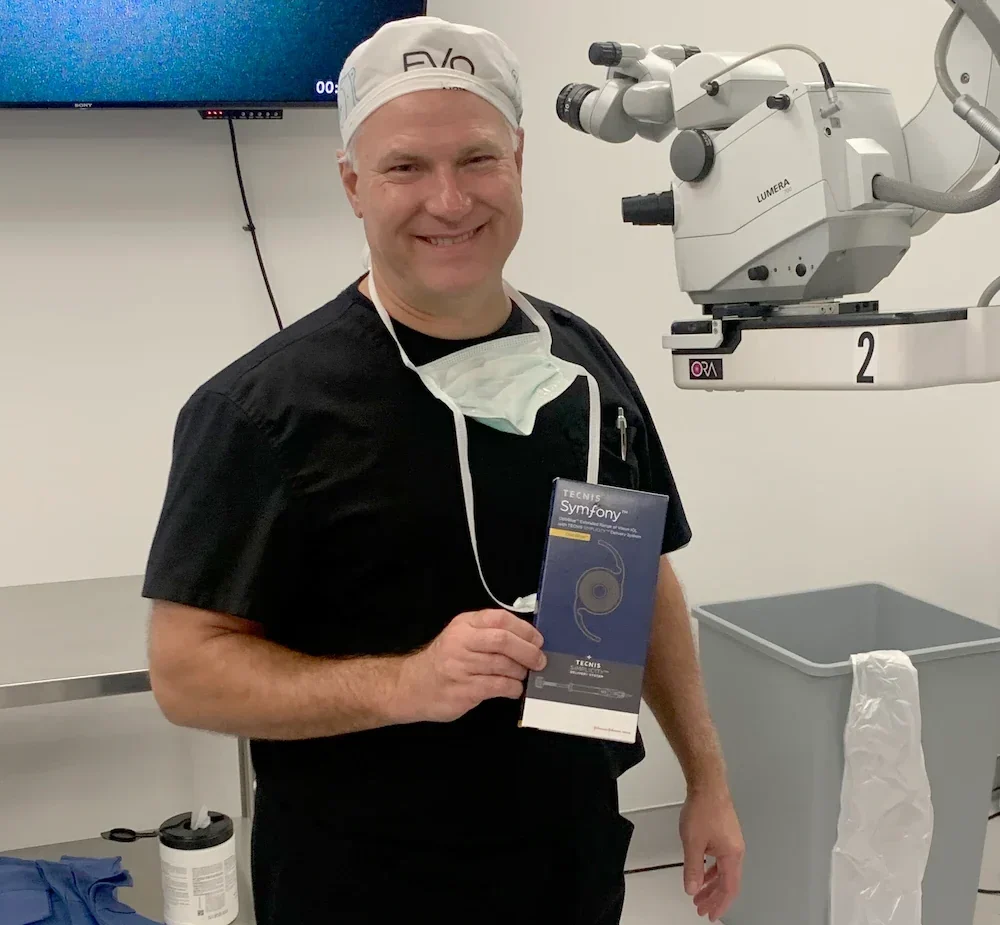
Kovach Eye Institute is led by board-certified comprehensive ophthalmologist Dr. Kevin J. Kovach, with 30 years of experience in advanced ophthalmology. Our practice brings together multiple experienced, board-certified surgeons dedicated to surgical excellence and innovation in cataract surgery. Each surgeon brings exceptional skill, clinical knowledge, and a commitment to achieving excellent outcomes for every patient.
Comprehensive Eye Care at Multiple Locations
Kovach Eye Institute serves patients throughout Chicago and the Chicagoland area with offices in Naperville, Elmhurst, South Barrington, and Lincolnwood. Our multiple locations make it convenient for you to access world-class cataract surgery and comprehensive eye care close to home.
Advanced Surgical Facilities and Accreditation
Surgeons at Kovach Eye Institute perform procedures at the Ophthalmology Surgery Center of Illinois (OSCI), a physician-owned, AAAHC accredited ambulatory surgery center founded by Dr. Kevin J. Kovach.
Designed specifically for ophthalmic procedures, OSCI provides a specialized outpatient environment for advanced eye surgery, including cataract surgery and vision correction procedures. The center is equipped with advanced surgical technology and supported by experienced clinical teams focused exclusively on eye care.
Advanced Technology and Techniques
We utilize advanced surgical technology to ensure optimal outcomes. Our commitment to staying at the forefront of ophthalmology means you benefit from the most current advances in cataract surgery.
Patient-Centered Approach
Your vision goals and lifestyle needs guide our treatment recommendations. We take time to understand your concerns and answer all your questions, ensuring you feel confident in your decision to proceed with surgery. Our surgeons are dedicated to patient education, ensuring you fully understand your condition, treatment options, and what to expect throughout your surgical journey.

Patient Testimonials and Reviews

Cataract surgery result beyond my expectations, 20/20 + for distance, 20/15 for intermediate and 20/20 for reading, no glasses!!! Surgical Center every employee was professional and amazing from the front desk to the Techs and nurses. - Michelle S.

Everyone was very professional and explained the Procedure for Cataracts Surgery in terms that I could understand. Dr Gradianu was Great he did my surgery and I couldn’t be happier. He is very thorough and explained everything. I would definitely refer him and Kovach Eye Institute to anyone who is in need of Cataract Surgery or just needing a good ophthalmologist. – Beverly C.
All three of the doctors I’ve seen I’ve done an excellent job. My eyes have come out very well. The clinicians were excellent also answered my concerns. Everyone has been very respectful very good bedside manner and have listened to my concerns. Special shout out goes to Anoop. He’s been calling me seeing how I’m doing. He’s a wonderful person. I can tell. He loves his job and loves his patients. – Allen I.
I will always be thankful that I was recommended to see Dr. Kovach. My previous retinal specialist never told me about my cataracts or what options I had to improve my vision. Now with Dr. Kovach directions, my vision is 20/20 and I will never have to wear glasses or use contacts again. Thank you Kevin, I couldn't have this without you. - John B.
I would highly recommend Kovach eye care. Dr Mateen removed the cataract in my right & left eye. Wow, what difference to be able to see again. The world is a brighter place. All the staff were very friendly and patient with me. It was a pleasant experience with fantastic results! - Joanne W.
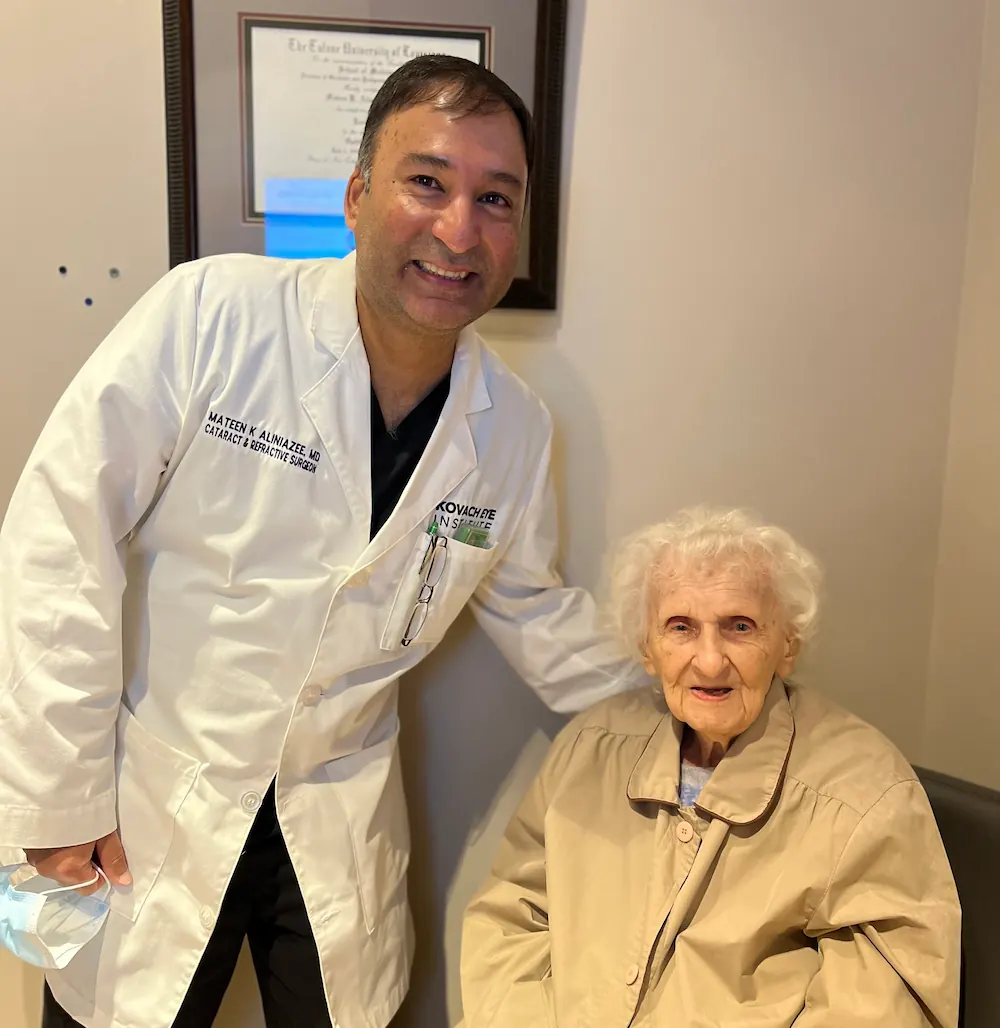
Five years ago I had my cataract surgery done by Dr. Mateen K. AliNiazee. I was amazed at that time by his surgical skills, his care for me as his patient, and his caring follow-up afterward. Five years later Dr. Mateen's and his caring staff continue to show their skills and compassion, as I return for regular check-ups and testing. I am most thankful and grateful! - Gilbert F.
My experience at Kovach Eye Institute from the initial cataract consultation to the surgery was great. I had an eye phobia and the staff and Dr. Gradianu put me at ease and made me feel comfortable throughout the entire process. I would definitely recommend Kovach Eye Institute. – Peter B.
After having cataract surgery, I can see like when I was 25 years old! Colors are so vivid and bright and the best part is I no longer need to wear my glasses. I would recommend Kovach Eye Institute.- Herbert K.
I was diagnosed with cataracts a couple of years ago. I wore inexpensive "readers" to accommodate my near vision needs, but my vision steadily declined. When I had to take a vision test to renew my driver’s license, I finally realized how poor my vision had become. That was the push to pursue cataract surgery. Now, after having surgery, I have my vision back! Surgery exceeded my expectations - my results are remarkable. I would absolutely recommend Dr. Mateen AliNiazee and all the caring and supportive staff at Kovach Eye Institute. – Lee Anne L.
Cost and Insurance Coverage
In many cases, cataract surgery is covered by Medicare and most private insurance plans when it is considered medically necessary.
What Insurance Typically Covers:
- Basic cataract surgery with a standard monofocal Intraocular Lens (IOL)
- Surgeon fees and facility costs
- Pre-operative and post-operative care
- Anesthesia fees
*Copays, deductibles, and coinsurance may apply
Out-of-Pocket Costs:
Patients who choose advanced technology intraocular lenses (including toric, multifocal, or light adjustable lenses) or astigmatism correction using laser-assisted cataract surgery, will have additional out-of-pocket costs since these upgrades are not typically covered by insurance.
Because every patient’s eyes and vision goals are unique, the best way to understand your exact cost is through a personalized consultation. During your visit, our team will review your insurance benefits, discuss advanced technology lens options and premium services, and provide a detailed cost estimate.
We accept most major insurance plans and offer financing options for patients without insurance or those choosing advanced technology lens upgrades.
Frequently Asked Questions
Kovach Eye Institute offers comprehensive cataract surgery with convenient locations in Naperville, Elmhurst, South Barrington, and Lincolnwood. Dr. Kevin J. Kovach, with 30 years of experience and board certification from the American Board of Ophthalmology, leads our team. We provide personalized treatment plans, advanced IOL options, and compassionate care to help you achieve improved vision and enhance your quality of life. Schedule your consultation today to discuss your cataract surgery options.
Cataract surgery typically takes 15-20 minutes per eye. While the procedure itself is brief, patients should plan to spend approximately 3-4 hours at the surgery center and set aside the full day, as timing can vary based on preparation and recovery.
This depends on the IOL you choose and your eye’s natural focusing ability. With a monofocal IOL, you’ll likely need glasses for reading or near vision. Multifocal or EDOF lenses may reduce or eliminate your need for glasses, though some patients still prefer them for certain tasks. Your doctor will discuss your options during your consultation.
Most patients can return to light activities within a few days and resume normal activities within 1-2 weeks. Strenuous exercise and contact sports should be avoided for at least 2-4 weeks. Your surgeon will provide specific guidelines based on your individual healing.
No. Your eye will be numbed with drops, and you’ll receive mild sedation to keep you comfortable. You may feel slight pressure during the procedure, but you should not experience pain. If you do, let your surgeon know immediately.
Typically, surgery is performed on one eye first, allowing it to heal before operating on the second eye. This is usually done 1-2 weeks later, giving you time to adjust to the new IOL in the first eye.
If you’re experiencing cloudy or blurry vision, difficulty seeing at night, increased glare sensitivity, halos around lights, or fading colors, these may be signs of cataracts. Schedule a comprehensive eye exam to determine if cataract surgery is right for you.
Most patients notice improved vision within hours of surgery. Functional vision typically returns within a few days, and stable vision is achieved within 4-6 weeks. You’ll have post-operative visits to monitor your healing and ensure optimal results.
In the early stages of cataract development, vision changes may be managed with updated eyeglass prescriptions, brighter lighting, or anti-glare sunglasses. However, these are temporary solutions, and surgery is the only way to permanently remove a cataract. Your surgeon will discuss all options during your consultation.
Schedule a Cataract Surgery Consultation in Chicagoland
If cataracts are affecting your vision, schedule a comprehensive cataract evaluation at Kovach Eye Institute. Our experienced cataract surgeons will perform advanced eye testing, review your treatment options, and help you choose the best lens for your vision and lifestyle.
Call us today at (630) 895-9581 or request an appointment at one of our Chicagoland locations in Elmhurst, Naperville, South Barrington, or Lincolnwood.
1 National Eye Institute. Cataract Data and Statistics. Available: https://www.nei.nih.gov/eye-health-information/eye-conditions-and-diseases/cataracts. Accessed February 16, 2026
2 National Eye Institute. Types of Cataracts. Available: https://www.nei.nih.gov/eye-health-information/eye-conditions-and-diseases/cataracts/types-cataract. Accessed February 16, 2026.
3 Cleveland Clinic. Cataracts (Age-Related). https://my.clevelandclinic.org/health/diseases/8589-cataracts-age-related. Accessed February 16, 2026.
4 Krader CG. Study: Effective lens position advances accuracy. Ophthalmology Times. January 1, 2012. Accessed February 16, 2026. Available: https://www.ophthalmologytimes.com/view/study-effective-lens-position-advances-accuracy. Accessed February 16, 2026.
The doctors at Kovach Eye Institute have either authored or reviewed and approved this content.
Page Updated: